Fall Leaves on Your Lawn: Remove Them or Mulch Them?
By YardHub · October 15, 2026
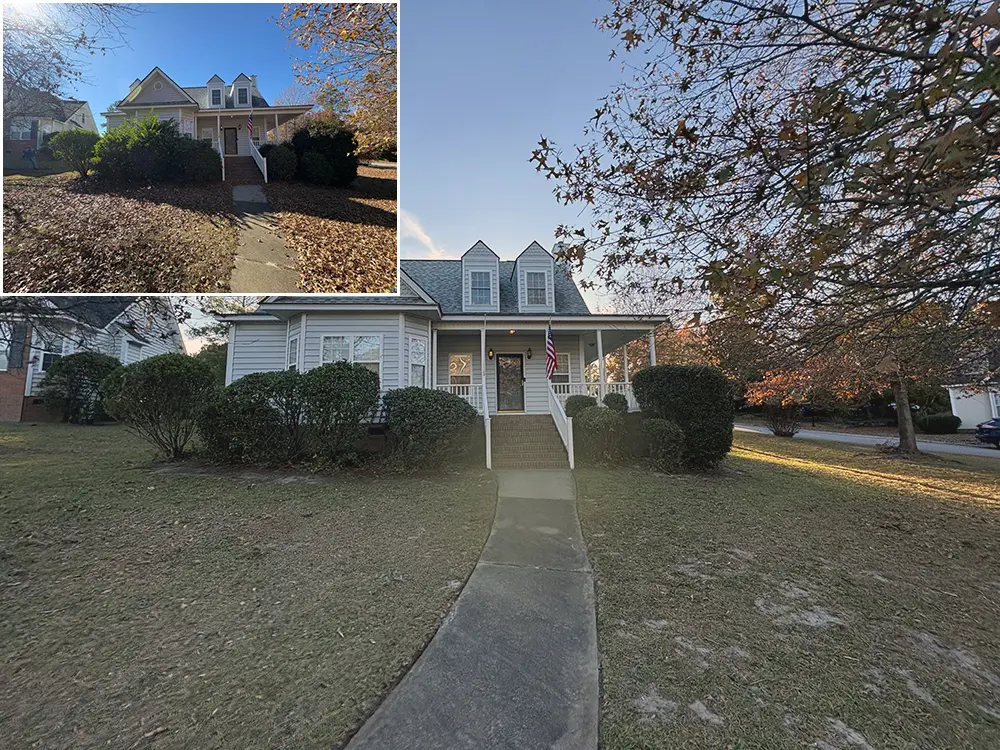
Every fall, Midlands yards from Chapin to Ballentine disappear under leaves. You don't need to bag every one, but leaving them on the grass all winter isn't the answer either. Here's what Clemson Extension and other university research say about raking, mulching and putting the extras to use.
Why a thick layer of leaves hurts your grass
A thick layer of leaves blocks sunlight, which slows the grass's growth 1. Leaves also trap and hold moisture in the lawn, raising the chance of turf disease 1. A leaf blanket can let disease or insect damage go unnoticed, too 2.
If you have a warm-season lawn (bermudagrass, zoysiagrass, centipedegrass or St. Augustinegrass), Clemson's advice is to keep tree leaves off it 3. A lawn covered with fallen leaves can't produce the carbohydrates it needs for cold tolerance 3.
Mulching leaves with your mower
For a light to moderate layer, you can skip the rake. Research found that mulching oak and maple leaves into the lawn didn't increase thatch, disease or weeds, and it usually improved soil structure 4.
- Use a mulching mower if you have one, though a regular mower will do the job 5.
- Walk or ride slowly so the blades can chop, and go back over the area in a cross direction if needed 5.
- Keep going until most pieces are dime-size or smaller 6.
- Skip soggy days: dry leaves mulch more easily than wet ones 4.
Regular mowing through fall chops leaves into small pieces that filter down into the grass 4. Pine needles are the exception: they resist breaking down, so use them around shrubs and in beds instead 1.
When there are too many leaves to mulch
If leaves are so thick you can't see the grass underneath, rake them so they don't shade out, smother and kill the lawn 4. University of Minnesota Extension suggests mulching only while about half of the lawn surface still shows; once less than half is visible, start bagging 7.
For lawns growing in shade, Clemson recommends removing leaves during fall by raking, blowing or bagging them as you mow 8.
Put extra leaves to work in beds and compost
Collected leaves make free mulch. Shred them coarsely with a mower or shredder first: whole leaves tend to blow away, while very finely shredded leaves can keep water from soaking in 9.
- Spread shredded leaves no more than 2 inches deep, since thicker layers can mat together and restrict water and air to roots 9.
- Keep mulch 2 to 3 inches away from the stems of woody plants to prevent decay and winter rodent damage 9.
- Don't love the look? Use shredded leaves as a bottom layer under pine straw or bark 10.
For compost, leaves are carbon-rich and combine nicely with grass clippings 11. Chop them first, since smaller pieces break down faster 12. A leaf pile kept watered and turned once or twice a month becomes leaf mold compost in 3 months to a year 13.
If neighborhood rules allow, Clemson suggests leaving one naturalized corner where leaves stay put through winter, as shelter for fireflies and other beneficial insects 14.
When to rake leaves in South Carolina
Don't wait for the last leaf to drop. Mulch-mowing is easier when leaves are dry and not piled too thickly, so start early 5. On warm-season lawns, raise the mowing height by half an inch in fall to promote deep rooting 3.
Fall clean-up checklist
- Lawn: Mulch light leaf cover; rake, blow or bag heavy layers 4, 8.
- Problem shrubs: Disease can overwinter on fallen leaves, so rake up debris around shrubs that keep struggling with fungal problems 14. Remove and destroy those leaves 13 rather than composting them 12.
- Beds: Refresh mulch with shredded leaves, keeping it off woody stems 9. Wait until late winter or early spring to cut back old perennial growth, and leave some stems standing for native bees 15.
- Debris: Skip the burn pile. Burning leaves wastes a valuable resource and can be dangerous 16.
Bagging leaves for pickup
Rules vary by location:
- Town of Lexington: Bag leaves, keep each bag under 50 pounds, and have yard debris at the curb by 7 a.m. 17.
- Richland County curbside service: Make one pile no bigger than 6 feet long, 3 feet wide and 2 feet high, within 6 feet of the curb and never in the street, storm drain or drainage ditch 18.
- Lexington County: County collection and recycling centers accept household quantities of bagged leaves; curbside pickup comes from your municipality or private hauler 19.
How YardHub Can Help
If your trees drop more than your mower can handle, YardHub's fall service includes leaf removal and leaf pulverizing, along with fall clean-ups and leaf and debris removal for homes and businesses across Lexington, Lake Murray, Irmo, Ballentine, Chapin and Columbia. Call (803) 408-4822 or request a free estimate.
Sources
- "Leave" Them Alone: Lawn Leaf Management, Virginia Cooperative Extension
- To Rake or Not to Rake?, Mississippi State University Extension
- Prepare Warm-Season Lawns for Winter, Clemson Cooperative Extension
- What To Do With All Those Falling Leaves?, Purdue Turfgrass Science
- Leaves Are Treasure, Not Trash, Penn State Extension
- Mulching fallen leaves with a mower, University of Georgia CAES
- Fall leaf mulching is good for your lawn, University of Minnesota Extension
- Growing Grass in Shade (HGIC 1202), Clemson Cooperative Extension
- Mulch, Clemson Cooperative Extension
- Leaves are Nature's Homemade Mulch, UGA Extension
- Fall Leaves: To Leave or Not to Leave, Clemson Cooperative Extension
- Composting, Clemson Cooperative Extension
- What to do with all the leaves?, Clemson Cooperative Extension
- This Month in Your Garden: November, Clemson Cooperative Extension
- What Should I Do (and Not Do) in My Yard This Fall?, NC State Extension
- Got Leaves?, Clemson Cooperative Extension
- Sanitation: Garbage and Recycling, Town of Lexington
- Curbside Pickup, Richland County
- Solid Waste FAQ, County of Lexington
