Pine Straw vs. Mulch: Which Is Right for Your Yard in the Midlands?
By YardHub · October 15, 2026
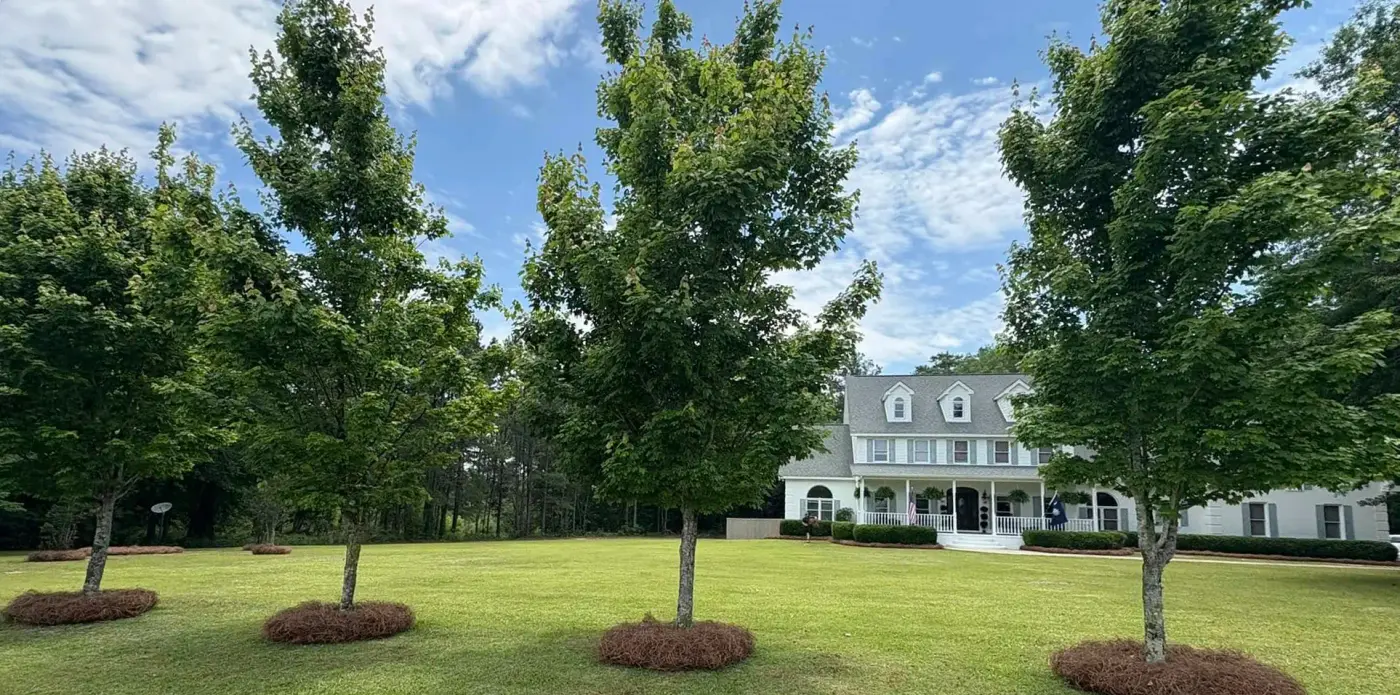
If you are choosing between pine straw and wood mulch for your beds in Lexington, Irmo or around Lake Murray, you are weighing two good options. Both protect soil and tidy a yard, but they differ in looks, lifespan, slope performance and fire risk near the house. Here is how they compare, based on Clemson Extension, other universities and fire-safety research.
What each material is
Pine straw is fallen pine needles; baled straw is raked from pine stands grown for wood and paper 1. "Mulch" usually means pine bark (shredded or in chunks called nuggets), wood chips, or hardwood mulch made from scrap lumber, recycled pallets or small trees 1, 2.
Pine straw vs. mulch at a glance
| Feature | Pine straw | Bark or wood mulch |
|---|---|---|
| Look | Natural; reddish-brown when fresh, gray with age 3, 4 | Pine bark is usually dark; hardwood comes in several colors 1, 2 |
| Slopes and heavy rain | Needles interlock and stay put, even on slopes 2 | Large bark nuggets can float away 2 |
| Wind | Can shift some in strong wind 5 | Shredded bark does not blow away 6 |
| Staying power | Often needs a yearly top-up 4, 7 | Pine bark kept two-thirds of its depth after two years in a UF/IFAS study 3 |
| Fire | Ignites fast and burns hot 8 | Burns too; no mulch tested was fireproof 8 |
How often to replace pine straw
Clemson says pine needles and bark mulches typically last around 2 to 4 years before you need to add more 2. Pine straw fades first, though: a UGA horticulturist says it lasts about a year before looking dingy, and Alabama Extension says it may need reapplying annually 4, 7. When it turns gray, add a thin layer of fresh straw on top 4.
How much pine straw do I need?
Clemson recommends a 2 to 3 inch layer of pine needles or bark and warns that piling fine-textured mulch deeper can suffocate roots 2. Pine straw settles after a rain, so Alabama Extension suggests spreading it thicker than bark 7.
For a bale count, multiply each bed's length by its width to get square feet. Alabama Extension says one bale generally covers about 50 square feet spread 5 inches deep, though bale sizes vary 7. NC State notes bales weigh anywhere from 8 to 25 pounds, so a 200 square foot bed could take four bales or more 7, 9.
Does pine straw make soil acidic?
Fresh pine needles are acidic, around pH 3.2 to 3.8 when they drop 10. Some guides say pine straw may slightly lower soil pH over time 1, but NC State soil scientists say its effect is no more than any other mulch because soil buffers the change 10. Both materials add organic matter as they decay, slow evaporation, and help block weeds when the mulch itself is weed-free and deep enough 2.
Termites: keep any mulch off the foundation
Mulch is cellulose and holds water, which can attract termites, so Clemson advises never letting it touch wood siding or door and window framing 11. Keep organic mulches at least 12 inches from the foundation; gravel or stone can fill that strip 12. Pine straw is not a workaround: Mississippi State Extension calls pine needles one of the best food sources for Formosan termite colonies, and Clemson reports Formosan termites are established in parts of Lexington and Richland counties 13, 14.
What about snakes?
Snakes go where they find cover and food, which is why brush piles and firewood that draw rodents and insects also draw snakes 15. We found no university research showing that pine straw draws more snakes than wood mulch, or the reverse. NC State suggests mowing closely around the house and keeping mulch layers around shrubs thin 16.
Fire risk next to the house
The South Carolina Forestry Commission lists pine straw as highly flammable and advises against using it beside wooden houses, fences or decks in wooded areas 17. In burn tests by USDA Forest Service and University of Florida researchers, pine straw spread fire fastest of four mulches, though every mulch burned, and the researchers recommend only gravel or stone right next to the home 8. For homes near woods, NFPA and NC State Extension advise clearing pine needles and using gravel or stone instead of wood mulch within 5 feet of the house 18, 19.
Skip the mulch volcano
Whatever you choose, never pile it against a tree trunk. Clemson warns that these mulch "volcanoes" damage bark and invite pest and disease problems 20, 21. Leave 2 to 3 inches of bare space around the stems of woody plants 2.
When to put down pine straw in South Carolina
Clemson says mulch around established plants is best applied in early spring 2. In its December tips for the Midlands, Clemson suggests blowing fallen leaves into beds and topping them with a fresh layer of pine straw 22. That makes early spring and early winter both good times to refresh.
Which is right for your yard?
- Pine straw: a strong fit for slopes and natural-looking beds, and light to handle, but it fades faster and is not ideal for foot traffic 1, 2, 3, 4.
- Bark mulch: holds its depth longer and offers a darker look (or more colors with hardwood); shredded bark stays put in wind, though large nuggets can wash out 1, 2, 3, 6.
- Gravel or stone: the safer choice for the first few feet around your foundation 8, 12, 18.
How YardHub Can Help
YardHub installs pine straw, mulch and decorative rock for homes and businesses across Lexington, Lake Murray, Irmo, Ballentine, Chapin and Columbia, along with spring and fall clean-ups and bed refreshes. Call (803) 408-4822 or request a free estimate.
Sources
- Mulching in the Landscape, University of Georgia Extension
- Mulch, Clemson Cooperative Extension
- Choosing and Installing Mulches, UF/IFAS Gardening Solutions
- Pine Straw Plentiful, Popular Mulch in Georgia, UGA CAES
- Mulch for the Landscape, NC State Extension
- Mulches for the Landscape (P2301), Mississippi State University Extension
- Drought-Tolerant Landscapes for Alabama, Alabama Cooperative Extension System
- Mulch Flammability, USDA Forest Service, University of Florida and NIST
- Managing Longleaf Pine Straw, NC State Extension
- Pine Needle Mulch: the Myths and Legends, NC State Extension
- Termites, Clemson Cooperative Extension
- Foundation Plantings, Clemson Cooperative Extension
- Protect Your House from Termites (P2568), Mississippi State University Extension
- Formosan Termites Increase Distribution in SC, Clemson Cooperative Extension
- Living with Snakes, Clemson Cooperative Extension
- Extension Gardener Handbook, Chapter 20: Wildlife, NC State Extension
- Fire Smart Plant List for South Carolina, South Carolina Forestry Commission
- Reducing Wildfire Risks in the Home Ignition Zone, NFPA
- Fire-Resistant Landscaping in North Carolina (AG-874), NC State Extension
- Planting Trees Correctly, Clemson Cooperative Extension
- Tree Maintenance, Clemson Cooperative Extension
- This Month in Your Garden: December, Clemson Cooperative Extension
